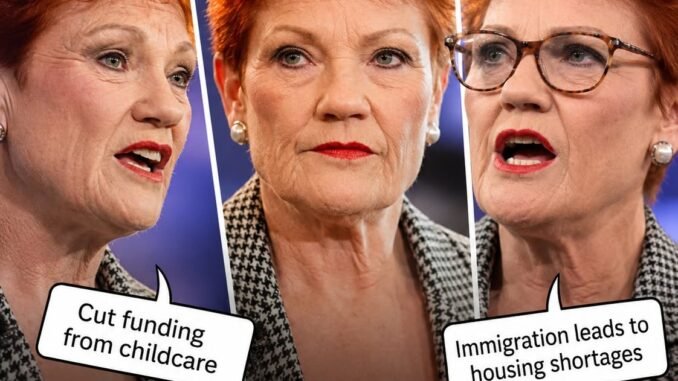
Pauline Hanson has outlined a political vision that would reshape many aspects of Australian public life, triggering renewed debate about immigration, national identity, multiculturalism and the direction of the country.
The One Nation leader used a high-profile national platform to argue that Australia is facing a series of interconnected challenges, including housing affordability pressures, infrastructure strain, social cohesion concerns and rising public frustration with the political establishment.
According to Hanson, many of these issues can be traced back to decisions made by successive governments over several decades. She argued that major reforms are needed if Australia is to avoid what she described as a worsening national crisis.

One of the central themes of Hanson’s vision is immigration.
She has repeatedly argued that Australia should significantly reduce migration levels, claiming current intake numbers are placing excessive pressure on housing supply, public services and infrastructure. Immigration has become one of the defining political issues in recent years as housing affordability continues to dominate public discussion across the country.
Hanson also used her speech to challenge Australia’s multicultural model.
She argued that the country should place greater emphasis on a shared national culture and common values rather than encouraging separate cultural identities. Among her proposals were calls for stronger expectations around English language proficiency and a greater focus on national unity.
Supporters of this approach argue that stronger integration policies would help strengthen social cohesion and improve community connections.
Critics, however, say multiculturalism has been one of Australia’s major success stories and warn that abandoning it could undermine social harmony in a country built by migrants from around the world.
The speech extended beyond immigration and cultural issues.
Hanson outlined a broader vision touching on government institutions, public broadcasting, national priorities and the role of political leadership. She argued that many Australians feel disconnected from decision-makers in Canberra and believe their concerns are not being adequately addressed by the major parties.
That message appears to be resonating with some voters.
Recent political commentary has suggested growing frustration with traditional political institutions, particularly among Australians concerned about cost-of-living pressures, housing affordability and the pace of social change. Analysts note that anti-establishment messages have gained traction in many Western democracies, and Australia has not been immune from that trend.
Housing remains one of the most important issues in the debate.
Australia continues to face significant affordability challenges, particularly in major cities where rising prices and rental costs have made it increasingly difficult for many households to enter the property market. Hanson argues migration settings should be part of any discussion about housing supply and demand.
Others argue the housing crisis is far more complex, involving planning regulations, construction costs, land availability, interest rates and years of underinvestment in new housing stock. The disagreement highlights why the issue remains one of the most contested areas of public policy.
Hanson’s speech also reignited debate over national identity.
Questions about what it means to be Australian, how cultural diversity should be managed and what values should unite the country have been recurring themes in Australian politics for decades. Her latest comments suggest those debates are likely to remain prominent in the years ahead.
Supporters view her willingness to raise controversial topics as evidence that she is addressing concerns other politicians avoid.
Opponents argue that some of her proposals risk deepening divisions and oversimplifying complex challenges facing modern Australia. They contend that many of the issues highlighted in the speech require nuanced policy responses rather than sweeping structural changes.
Regardless of where Australians stand on Hanson’s agenda, the reaction demonstrates how influential debates about immigration, housing, national identity and social cohesion have become.
With economic pressures continuing to affect households across the country and political dissatisfaction remaining elevated, discussions about Australia’s future direction are unlikely to disappear anytime soon.
As attention turns to upcoming political contests and policy debates, Hanson’s vision is certain to remain a talking point among supporters, critics and undecided voters alike. The broader question now is whether these ideas remain on the political fringe or become part of the mainstream national conversation.
Leave a Reply