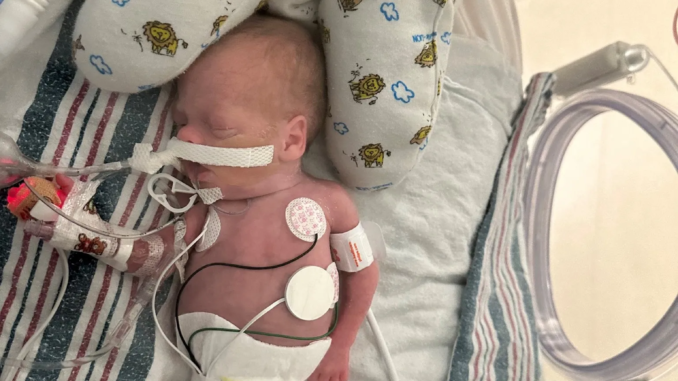
I am writing this as a diary entry because some beginnings are so fragile that they never truly leave you. They settle into your memory, into your breath, into the way you watch your child sleep long after the danger has passed. My daughter’s name is Elaina, and her life began far earlier than it should have, in a world she was not ready for, surrounded by machines that would become her first lifeline.
Elaina was born at just twenty-four weeks. So small that my hands trembled when I first saw her. So early that nothing about her arrival felt safe or celebratory. Instead of warmth and quiet, there were alarms, rushed footsteps, and urgent voices. Her lungs were not fully developed, and within moments of being born, she was taken from me and placed on a ventilator in the NICU.
Pain arrived immediately, sharp and consuming, not from her body, but from the unbearable truth that I could not protect her from what she had already been forced to face.
Fear followed pain without hesitation. I learned how to stand beside an incubator and feel completely helpless. I watched her chest rise and fall with mechanical assistance, every breath borrowed, every second uncertain. I measured time not in hours, but in heartbeats and oxygen levels. I learned the sound of alarms before I learned the sound of her cry. Loving her meant living with fear constantly humming beneath every thought.
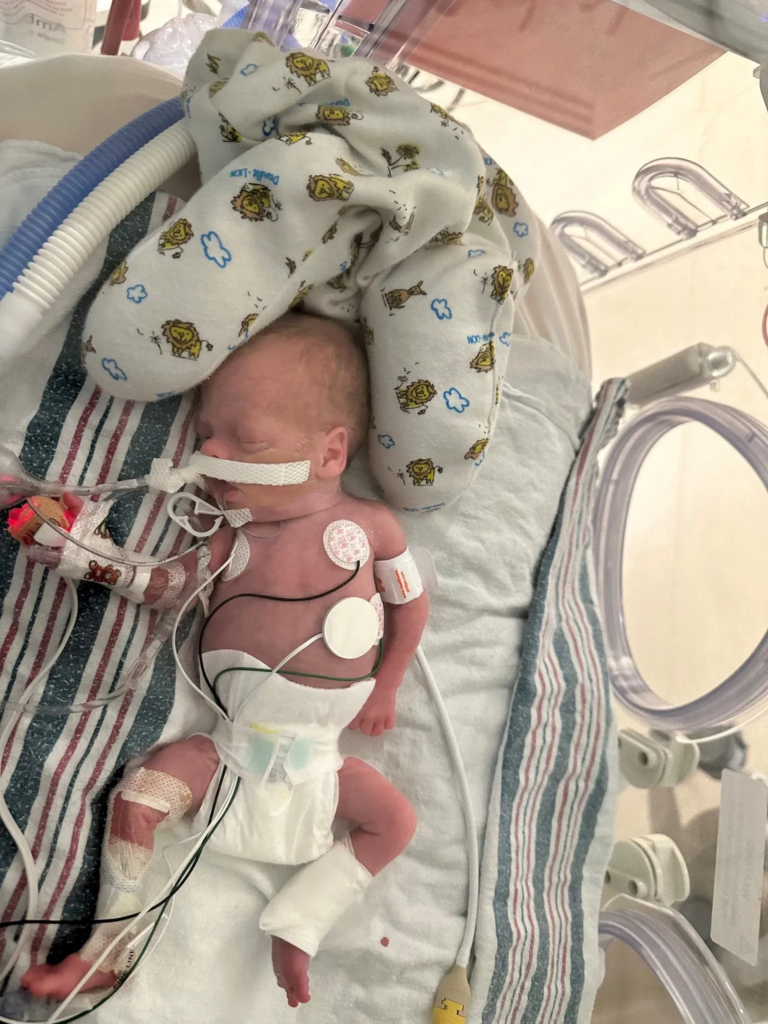
Two months into her life, when she was still fighting just to breathe, Elaina needed another battle. She was transferred to Cincinnati Children’s for surgery to correct a patent ductus arteriosus. The opening between the blood vessels near her heart, something that usually closes after birth, had not closed for her. It was stealing precious strength from a body that already had so little to give. Handing her over for surgery felt like surrendering the last piece of control I thought I had left.
The surgery was successful, but relief never lasts long in the NICU. New challenges emerged, one after another. Elaina developed bronchopulmonary dysplasia, a chronic lung disease that affects premature babies who need long-term oxygen and ventilator support.
Her lungs, already fragile, now carried scars of survival. Each breath remained work. Each day remained uncertain. I learned that surviving one hurdle does not mean the road ahead becomes easier.
Then came her eyes. Retinopathy of prematurity. Another diagnosis. Another reminder of how prematurity can touch every part of a tiny body. Abnormal blood vessels were growing in her retinas, threatening her vision.
I remember sitting in a chair beside her bed as doctors explained eye injections and laser surgery, words that sounded impossibly heavy for a baby who could barely open her eyes. Fear deepened then, spreading into places I didn’t know it could reach.
Setbacks became part of our routine. Progress was never linear. There were days when Elaina seemed stronger, and days when it felt like we were starting over. Her treatments continued. Medications. Respiratory support. Eye procedures meant to protect a future she had not yet been allowed to imagine.
One hundred and nine days passed in the NICU, each one demanding patience, resilience, and faith that tomorrow could still be better.
Endurance did not feel heroic. It felt exhausting. It was waking up every day and choosing to show up anyway. It was learning how to celebrate victories that others might overlook. A stable night. A reduction in oxygen. A calm moment where her body rested instead of fought. Endurance was learning how to live inside uncertainty without letting it crush you completely.
Slowly, almost imperceptibly, things began to shift. Elaina’s lungs grew stronger. Her treatments started to work. The machines stepped back, one by one. The fear did not disappear, but it softened, replaced by cautious hope that felt too delicate to speak out loud.
When we were finally told she could go home, I was afraid to believe it. Home felt like a word meant for other families, not for one that had lived inside hospital walls for so long.
But we carried her out anyway. Wrapped in blankets. Surrounded by instructions. Filled with gratitude and lingering fear. Home was not the end of her journey, but it was a beginning we had fought hard to reach. We learned how to parent without constant alarms, how to trust her body, how to breathe when she breathed.
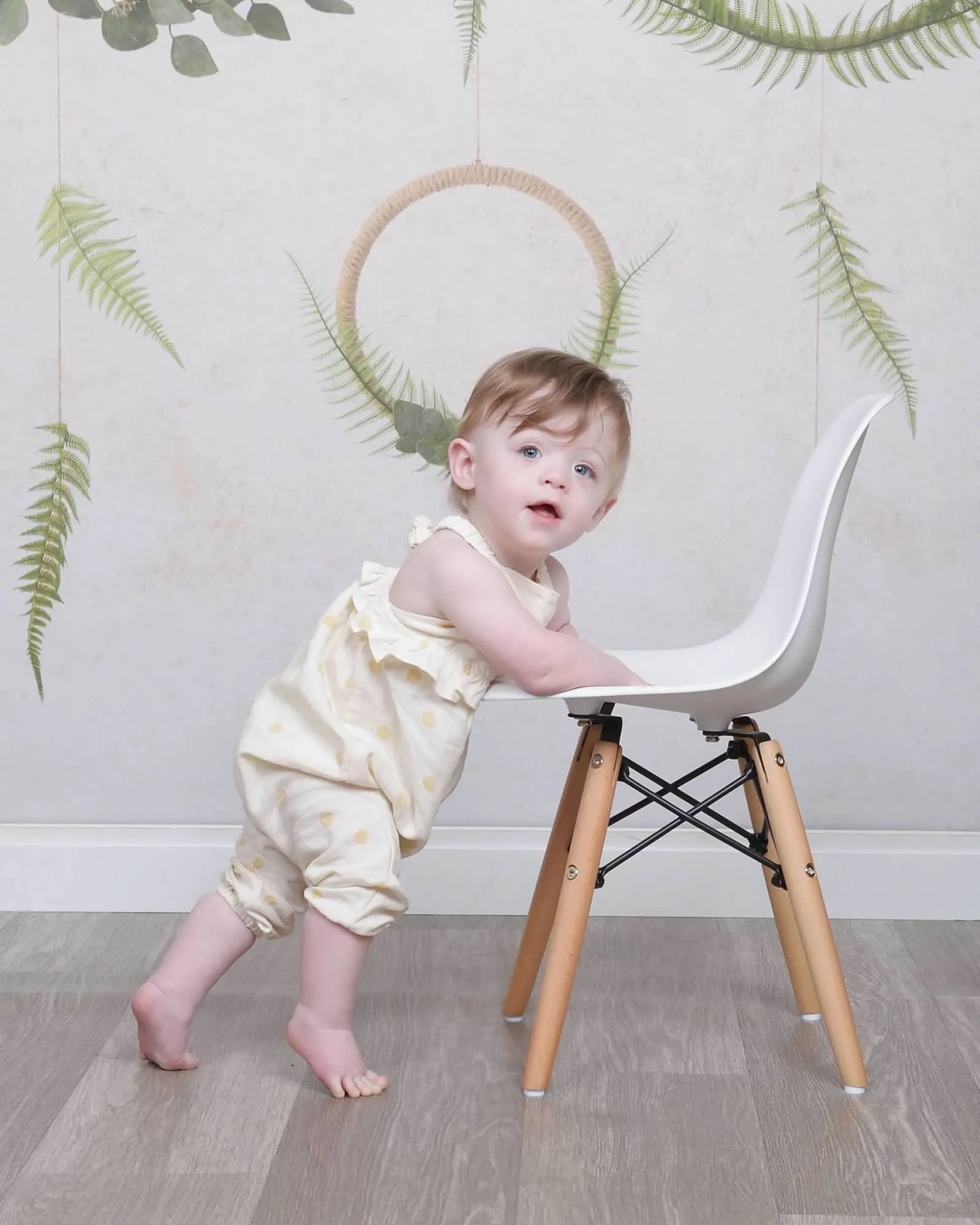
Hope revealed itself in unexpected ways. Elaina began to grow, to explore, to push against limits she once couldn’t even reach. She learned how to sit, how to pull herself up, how to stand with determination written across her face. Each attempt to walk felt monumental, a quiet rebellion against everything that once tried to hold her back.
Today, Elaina is a happy child. She laughs easily. She is learning to stand and walk, testing her strength with every step. And she is now a big sister, something that once felt impossible to imagine when survival itself was uncertain. Watching her interact with her sibling, gentle and curious, fills me with a gratitude so deep it almost hurts.
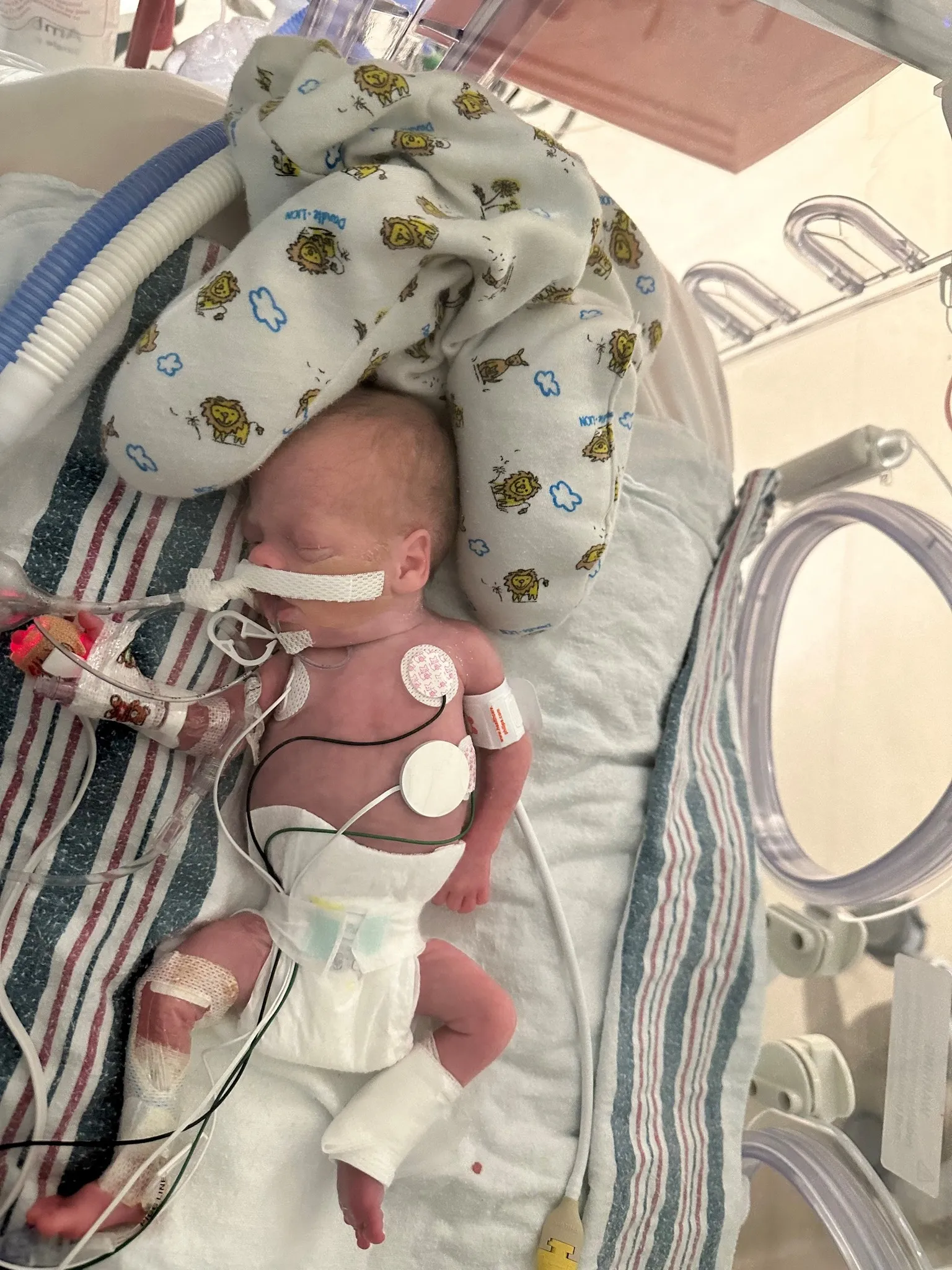
The NICU days have not been erased. They live in my memory, in the way I still check her breathing at night, in the way my heart tightens when she coughs. But they no longer define her. Elaina is not the baby who needed machines to breathe. She is the child who learned how to fight before she learned how to walk.
This diary is not just about prematurity or medical diagnoses. It is about pain that arrives too soon, fear that takes over before love has time to settle, setbacks that threaten to steal hope, endurance that grows out of sheer necessity, and hope that finally finds its way in through the smallest cracks.
Elaina’s life began at twenty-four weeks, fragile and uncertain. But it continues now with strength, curiosity, and a future filled with possibility. And every time I watch her try to take another step, I am reminded that sometimes the smallest beginnings create the strongest hearts.
Leave a Reply