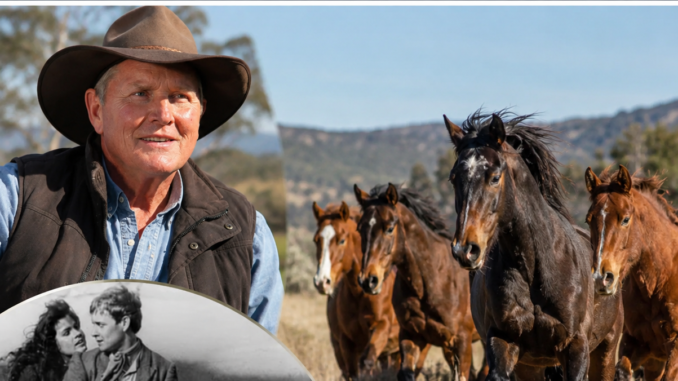
Tom Burlinson has launched a passionate attack on the aerial culling of brumbies in Kosciuszko National Park, calling the practice “barbaric” and urging the NSW Government to halt the operation immediately
The actor, best known for his starring role in The Man From Snowy River, said he was deeply disturbed by the decision to resume helicopter shooting of wild horses across the Snowy Mountains.
Burlinson argued there was no realistic way to guarantee the animals could be killed quickly and humanely from a moving aircraft, describing the program as both cruel and unnecessary.
His intervention has added another high-profile voice to a growing debate that has divided conservation groups, animal welfare advocates and rural communities across New South Wales.
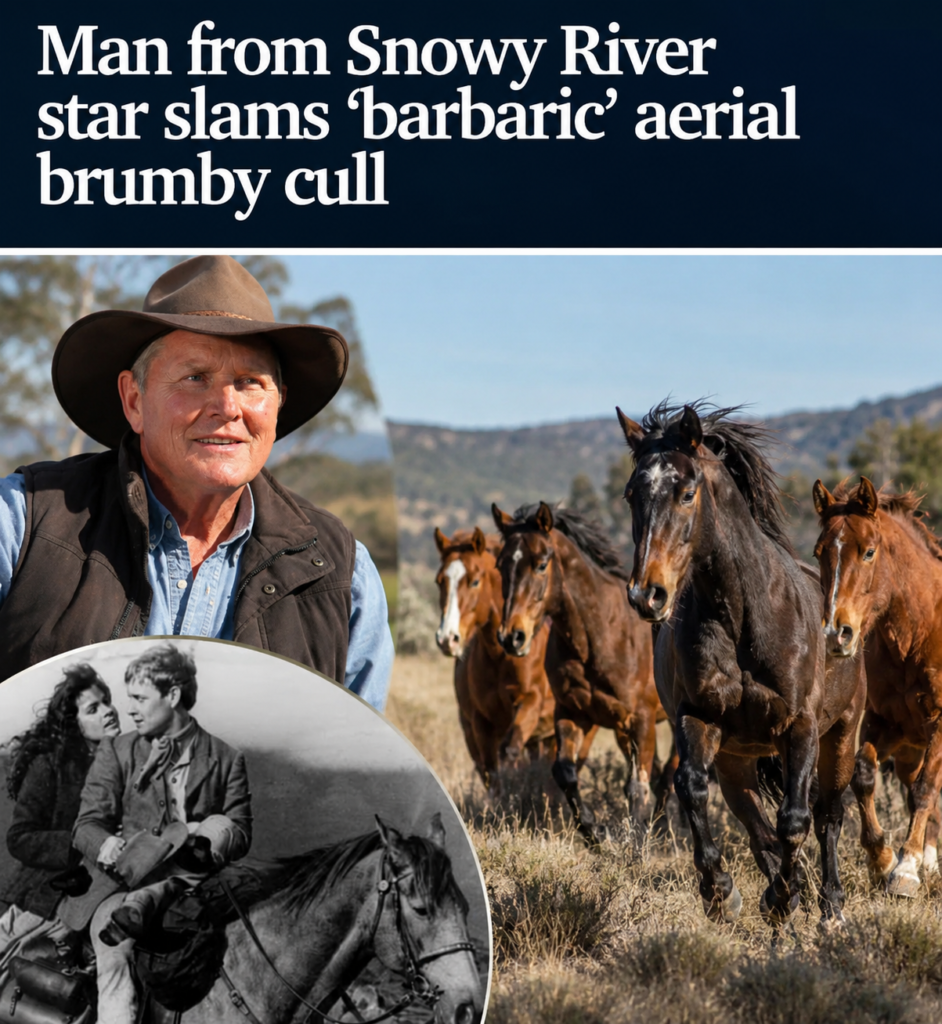
The latest aerial culling program resumed this week as part of the NSW Government’s effort to reduce wild horse numbers in Kosciuszko National Park.
Authorities argue the brumby population has grown well beyond sustainable levels and is causing extensive damage to fragile alpine ecosystems, waterways and native vegetation.
Recent government surveys estimated there could be between several thousand and more than 16,000 brumbies within the national park, far above the official target population. Environmental managers say action is necessary if long-term ecological damage is to be avoided.
Burlinson strongly disputes the approach being taken.
Drawing on his long association with Australia’s high country and his experience working with horses, he argued that aerial shooting is not an acceptable solution. He questioned whether the population estimates used to justify the operation accurately reflect conditions on the ground.
For many Australians, the issue extends beyond wildlife management.
Brumbies have occupied a unique place in Australian culture for generations. Their image has been immortalised through literature, film and folklore, with The Man From Snowy River helping cement their status as symbols of the nation’s bush heritage.
Supporters of the horses argue that cultural significance should be considered alongside environmental concerns when management decisions are made.
Animal welfare advocates have also raised concerns about aerial shooting methods.
Critics claim horses can suffer serious injuries before dying and argue there is insufficient public oversight of what occurs during operations in remote terrain. Several advocacy groups have called for alternative approaches including rehoming programs, fertility control and expanded sanctuary networks.
Some organisations insist thousands of horses could be relocated rather than destroyed if governments were willing to invest more heavily in those programs.
The NSW Government maintains the current strategy is supported by scientific evidence and expert advice.
Officials say unmanaged horse populations continue to damage sensitive habitats, threaten endangered species and place additional pressure on ecosystems already facing environmental challenges.
Government representatives have also pointed to legal obligations requiring reductions in feral horse numbers over coming years.
Environment Minister Penny Sharpe has acknowledged the issue remains emotionally charged but has defended ongoing management efforts as necessary to protect the national park.
The disagreement reflects a broader conflict that has been building for years.
On one side are conservationists who argue the environmental damage caused by feral horses can no longer be ignored. On the other are brumby supporters who believe the animals represent an important part of Australia’s history and should be protected through humane alternatives.
That divide has become increasingly visible as petitions, public campaigns and political pressure continue to grow.
Hundreds of thousands of signatures have been collected through various campaigns opposing aerial shooting, while environmental groups continue to push for stronger action to reduce horse numbers.
Burlinson’s comments are likely to add further momentum to that debate.
As one of the most recognisable faces associated with Australia’s high-country heritage, his criticism carries particular weight among supporters of the brumbies.
Whether the government changes course remains uncertain, but the controversy surrounding Kosciuszko’s wild horses shows no sign of disappearing.
With aerial operations continuing and opposition growing, the future of the brumbies remains one of the most emotionally charged environmental issues currently facing New South Wales.
Leave a Reply