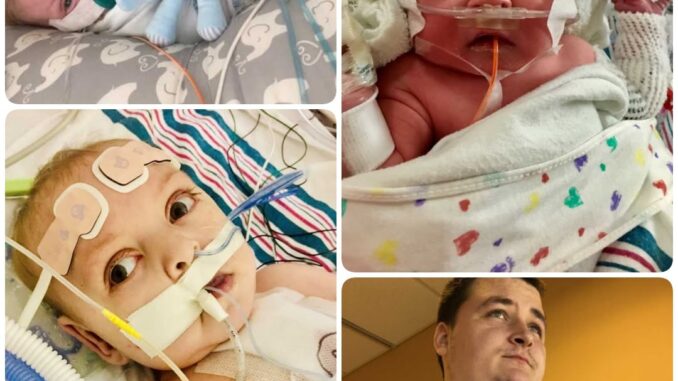
The news we received at our 16-week anatomy scan was nothing short of a shock. Our unborn son, Michael, had a noticeable heart defect. This wasn’t just any defect; it was a condition called Hypoplastic Left Heart Syndrome (HLHS)—a heart condition that would drastically alter the course of his life and our family’s journey.
We were given three options from the start: termination of the pregnancy, palliative care, or a three-step surgery plan that might give Michael a chance at life. The surgeries, Norwood, Glenn, and Fontan, offered us a flicker of hope, but with it came the terrifying statistic that Michael had only a 50% chance of surviving the first surgery.
The weight of those words sank in deep, but our choice was clear—we weren’t going to give up on our son. Despite the odds, we believed Michael deserved the chance to fight.
The rest of my pregnancy with Michael was relatively smooth, aside from the numerous appointments and procedures. I was followed closely by my high-risk OB, and Michael’s heart was monitored regularly to ensure no new surprises arose. As my due date neared, I was prepared for the arrival of my son, but nothing could have fully prepared me for the whirlwind that was about to unfold.
At 38 weeks, I went for a routine appointment. My blood pressure was high, and my OB quickly made the decision to induce labor. Within hours, I was rushed into the operating room for a cesarean section after complications with my labor stalled. My husband, Steven, stayed with our family as we were wheeled to the OR. I felt a mixture of nerves and a strange sense of peace—today would be the day we finally met our baby boy.
At 6:50 a.m. on August 11, Michael was born. The doctors immediately whisked him away. I had never experienced such a raw mix of emotions before. Was he okay? Would he cry? I couldn’t see him. I couldn’t hear him. It felt like an eternity before Steven was allowed to see him. I held my breath, but when Steven came back, he reassured me, “He’s perfect.” Michael had ten fingers, ten toes, and a full head of dark hair. No intubation was necessary. I could finally hold him the next day.
But the road ahead was anything but easy.
At just 12 days old, Michael had his first open-heart surgery. We anxiously awaited updates from the surgical team. They reassured us with each call, “They’ve gained access,” and “He’s off bypass.” But when I finally saw my baby after surgery, I felt a deep, almost paralyzing shock.
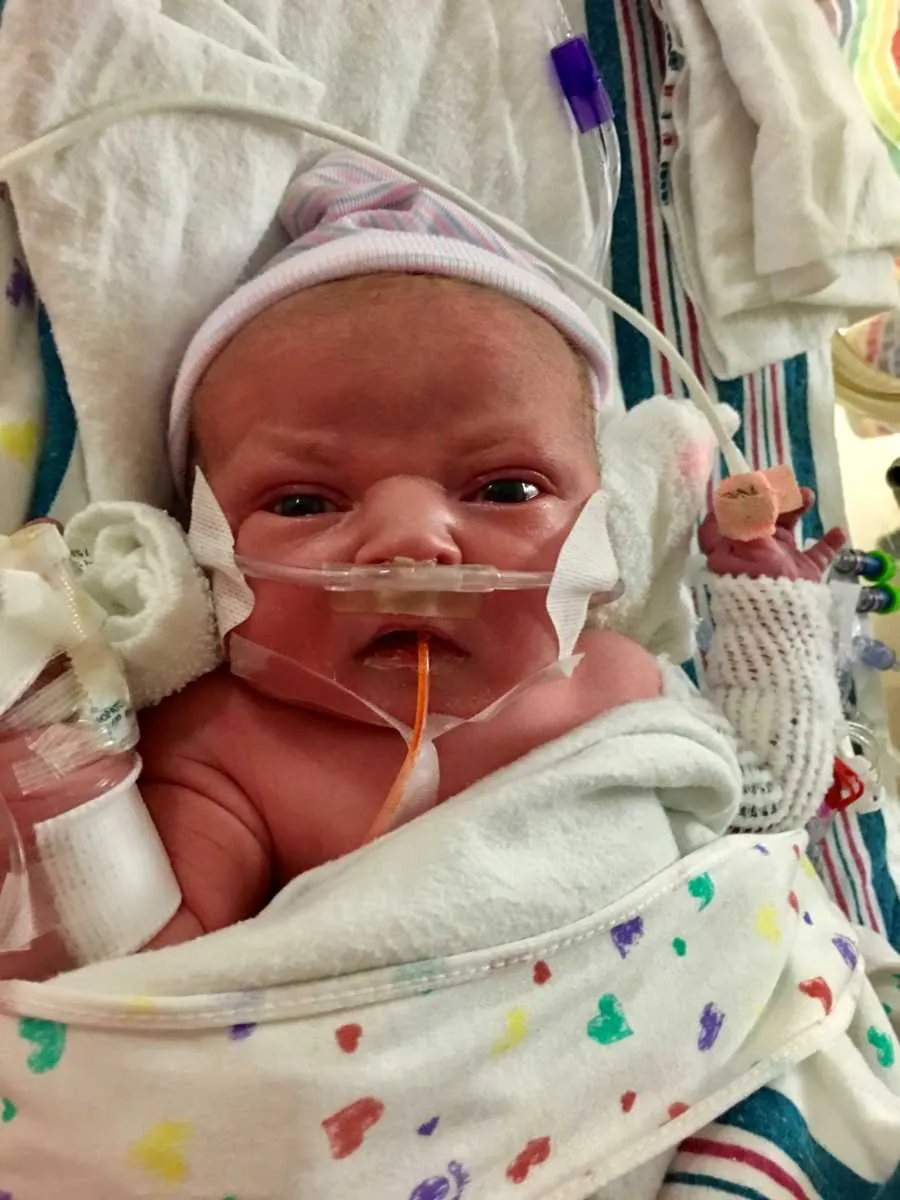
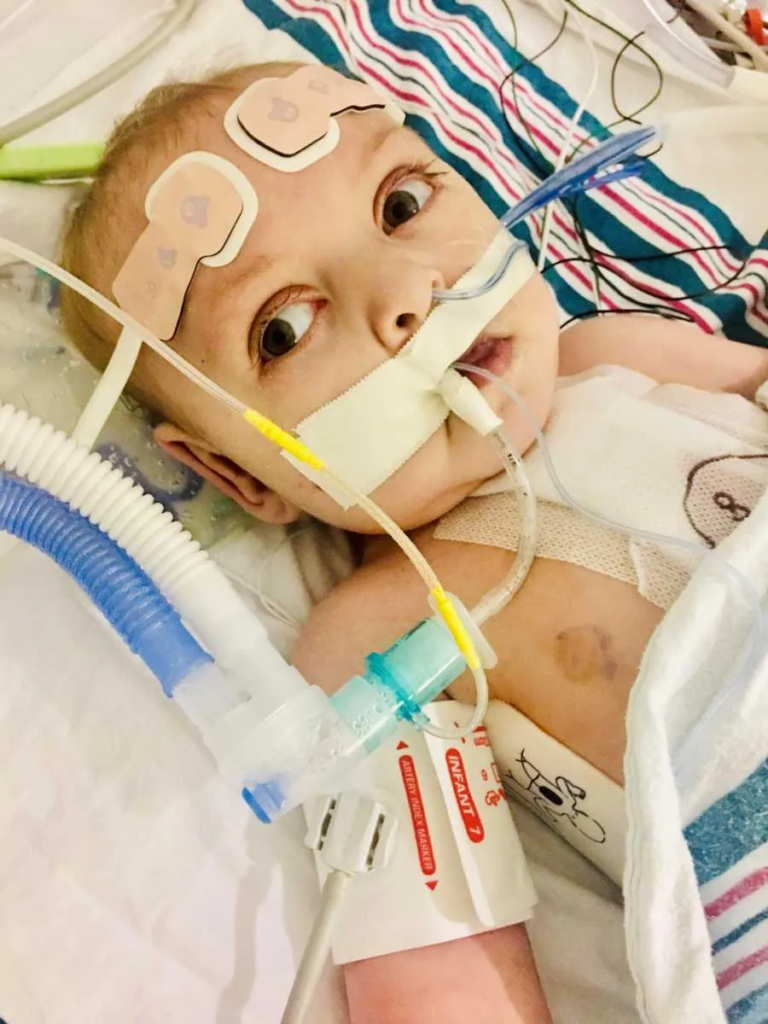
He didn’t look like my baby anymore. He was lifeless, blue, and pale, intubated with wires and tubes coming out of every part of his tiny body. The machines were beeping constantly, the alarms ringing in my ears. The moment was surreal. I wanted to cry, scream, or do anything to make this not real, but I was frozen, unable to do anything.
And then the worst happened—Michael coded. He went into full cardiac arrest.
My heart stopped. I felt time stand still as I watched the medical team, including his surgeon, Dr. Shillingford, work frantically to save him. I watched as Dr. Shillingford squeezed Michael’s tiny heart in an effort to restart it. I couldn’t breathe. My mind raced. My parents rushed to the hospital, their faces filled with fear and confusion. The minutes felt like hours, and every moment seemed to stretch into eternity.
But miraculously, Michael came back. It was a testament to the skill of the doctors and the fighting spirit of my baby boy. But the fight was far from over. Michael was taken for an exploratory catheterization procedure to determine the cause of the cardiac arrest. After what felt like a lifetime, the doctors couldn’t find a clear cause. The fear remained that Michael might code again.
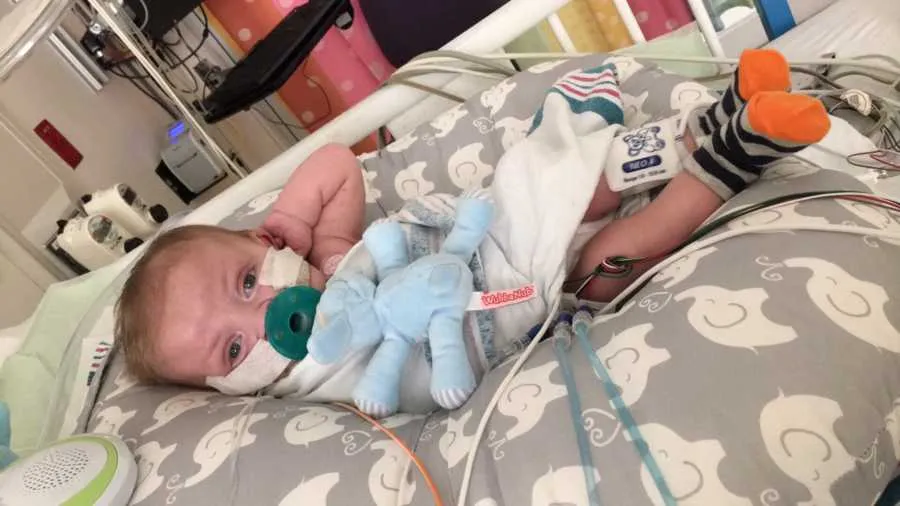
To give his heart the rest it desperately needed, we made the decision to place Michael on Tandem Heart (ECMO), a machine that would provide life support for his heart and lungs. The color in his face changed almost immediately, reassuring us that we were doing the right thing. He remained on ECMO for five days, and gradually, he started to improve. The strength and resilience he showed through it all were nothing short of incredible.
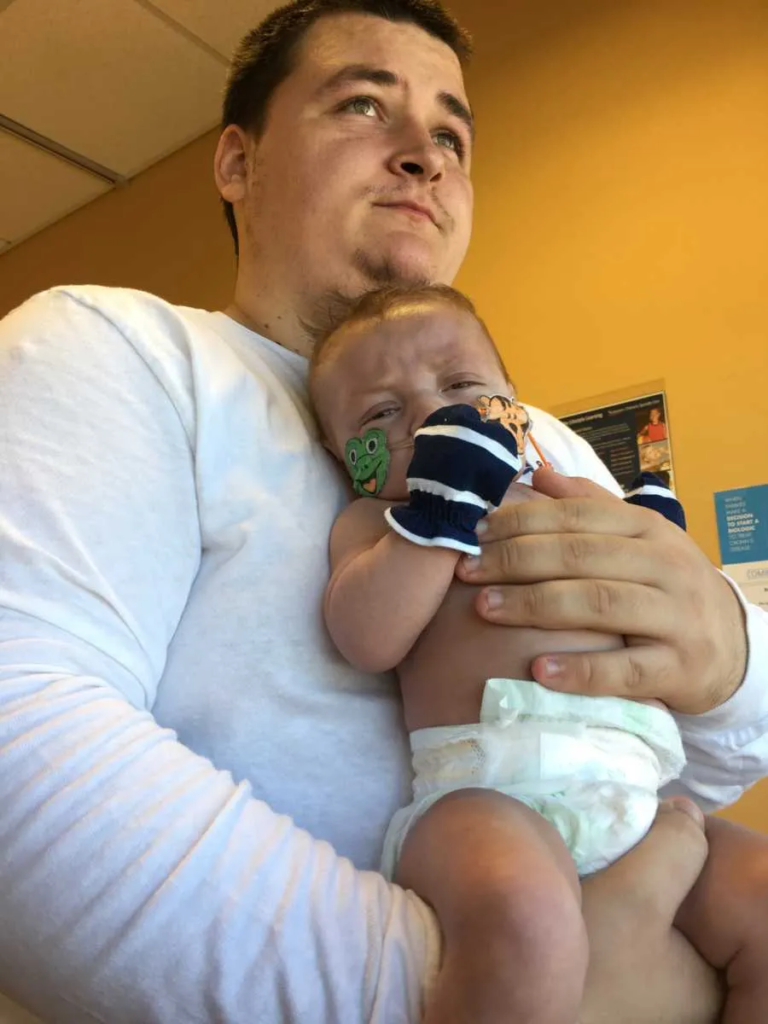
Finally, at 6 weeks old, Michael was discharged from the hospital. We couldn’t believe it. After all the pain, uncertainty, and heartbreak, we were finally taking our baby home. He still needed oxygen and a feeding tube, but the fact that he was alive was a miracle in itself. We were cautiously optimistic about what the future held, knowing that Michael still had a long road ahead of him.
The journey wasn’t over. Every day with Michael was a gift, but it was also a challenge. We would continue to monitor his health closely, attend doctor’s appointments, and work with a team of specialists to ensure he received the care he needed. But one thing was certain—Michael was a fighter. Through every challenge, he showed us just how strong and resilient he truly was.
As we settled into our new life with Michael, we couldn’t help but feel an overwhelming sense of gratitude. Despite everything he had been through, Michael was thriving. His heart surgery had given him the chance to live, and every day with him was a reminder of the miracle he was.
Looking back, it’s hard to believe how far we’ve come. The road was long, and there were moments when we weren’t sure if we’d make it. But here we are, with our baby boy, full of hope and determination. We know there are still obstacles to face, but we are ready for whatever comes next. Michael’s journey is far from over, but he has already shown us that there is no challenge too big for him to overcome.
Michael’s story is one of survival, strength, and love. He has taught us all what it means to fight for life, to trust in the doctors, and to never give up, no matter how difficult the journey may seem. He’s our little miracle, and we are so incredibly proud of the brave little boy he has become.
Leave a Reply