
Sometimes the biggest media controversies are not caused by what is said.
They are caused by the decision to give someone a microphone in the first place.
That is the debate now unfolding across Australia after Karl Stefanovic’s controversial interview with British commentator Tommy Robinson sparked fierce reactions from viewers, journalists and political figures.Politics
For some Australians, the issue is simple.
They believe controversial figures should be challenged, questioned and scrutinised rather than ignored.
Others argue that providing a platform to highly divisive personalities risks normalising views that many people find deeply troubling.
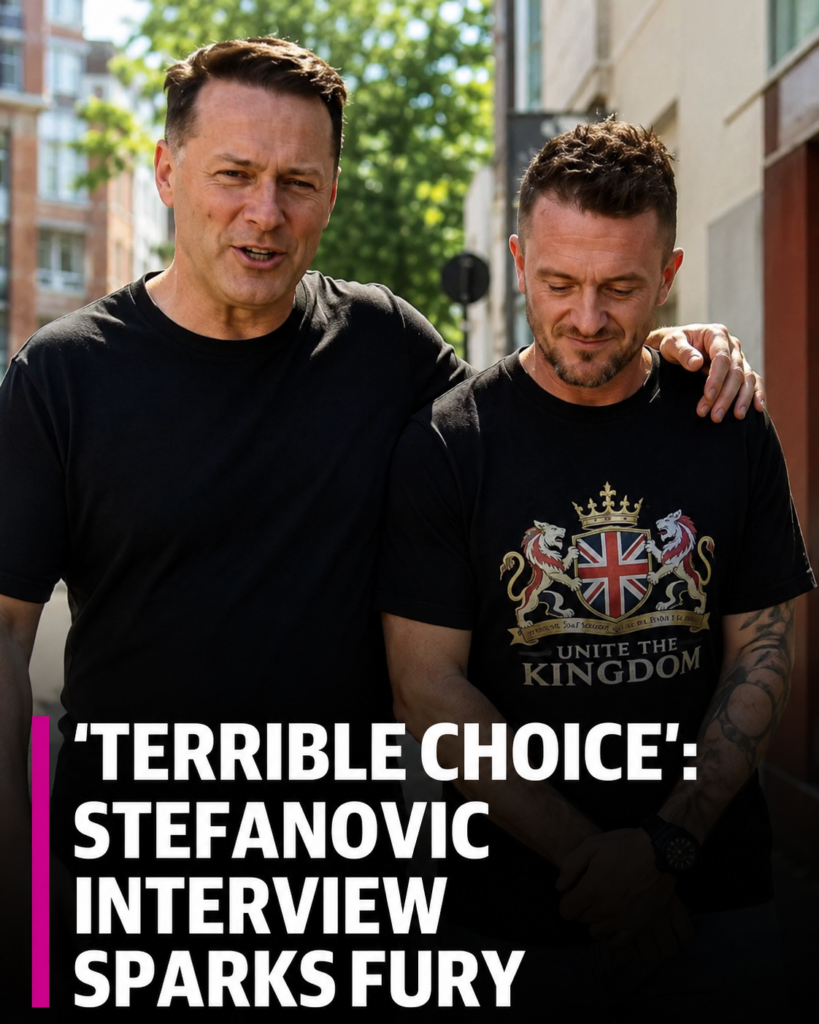
The interview quickly became one of the most talked-about media stories in the country.
Shortly after publication, the episode disappeared from major platforms including YouTube and podcast services, creating even more attention than the interview itself had originally generated. The removal fuelled speculation about pressure behind the scenes and intensified debate about whether the interview should have been produced in the first place.
At the centre of the controversy is a question that has confronted journalists for decades.
Where is the line between interviewing controversial figures and amplifying them?
News organisations regularly interview politicians, activists, business leaders and public figures whose views divide public opinion.
Supporters of these interviews argue that journalism is often about exposing audiences to important conversations, even when those conversations are uncomfortable.
Critics respond that some individuals deliberately use media appearances to expand their influence and reach new audiences.
That disagreement has become even more intense in the age of podcasts and independent media.
Traditional television interviews are often tightly edited and controlled.
Podcasts, by contrast, allow guests to speak at length and explore topics with far fewer restrictions.
Supporters see this as a strength.
Critics see it as a risk.
The reaction to Stefanovic’s interview illustrates how divided Australians remain on that question. Public criticism emerged almost immediately, while others defended the decision on free speech grounds and argued audiences should be trusted to make up their own minds.
The controversy has also placed fresh attention on the changing media landscape.
Across Australia and overseas, high-profile television personalities are increasingly building independent podcast audiences alongside their mainstream media careers.
Those platforms often encourage longer conversations, more opinionated content and guests who might never appear on traditional current affairs programs.
The strategy can attract large audiences.
It can also generate significant backlash.
Stefanovic’s podcast has already attracted attention for featuring guests and viewpoints that differ from the highly structured format Australians have traditionally associated with mainstream television news.
For media organisations, that creates a difficult balancing act.
Audiences increasingly demand authenticity, long-form discussions and unrestricted conversations.
At the same time, broadcasters remain conscious of their reputations, advertisers and public expectations.
When a controversy erupts, those competing pressures can quickly collide.
That appears to be what is happening now.
Nine has publicly stated that the podcast operates independently of the network, but reports indicate the company is taking the fallout seriously and reviewing the situation. The controversy has generated internal debate and wider questions about the relationship between personal media projects and mainstream broadcasting brands.
Yet the story may ultimately be about something even larger than one interview.
Australians are increasingly debating who gets heard, who decides which voices deserve attention and whether attempting to silence controversial opinions actually reduces their influence.
Those questions have no easy answers.
They are being argued in newsrooms, on social media, around dinner tables and throughout political circles.
Long after the headlines about this particular interview fade away, those arguments are likely to continue.
Because in a world where anyone with a microphone can reach millions of people, the debate is no longer just about what gets said.
It is also about who gets the chance to say it.
Leave a Reply